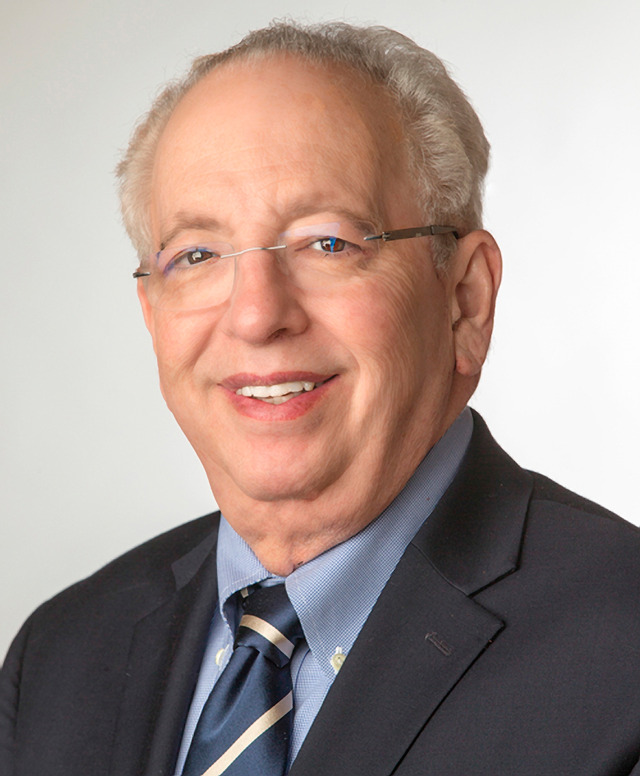
I hold a PhD in mathematics from the University of California, Berkeley, awarded in 1973 under Jerrold Marsden. I took my bachelor’s degree in mathematics there too, in 1969.
I taught mathematics at the University of Texas at Austin from 1977 to 1982, and published on decompositions of tensor fields over unbounded regions and on general relativity.
After that I applied mathematics to whatever the work in front of me happened to be: seismic imaging at Shell Research, market segmentation at my own survey company, 3D graphics architecture at IBM, and classified systems at TASC.
I was at IBM twice. From 1987 to 1994 I led the architecture and development of the 3D graphics and multimedia subsystems for the RS/6000 workstation, and I was a founding member of the OpenGL Architecture Review Board. From 2003 to 2014 I was an IBM Distinguished Engineer in the Software Group, having arrived there with Rational Software when IBM bought it. I am the lead inventor on fifteen IBM patents.
At Rational, from 1998 to 2002, I wrote RUP SE, the Rational Unified Process extension for systems engineering, and I co-founded the SysML Partners consortium that drafted the SysML standard.
I founded Aptage in 2016 and was its chief scientist. Aptage sold Bayesian estimation and machine learning as cloud services, and Planview bought it in 2020. I went with it, and spent 2020 to 2022 as Planview’s chief data scientist, putting the Aptage technology into their tools.
I have written two books on leading complex development, and a third, Project Economics Under Uncertainty, is in press with Glen Alleman and Christian Smart.
The through line is narrow and I have never much strayed from it: given the evidence in front of you, what can you honestly conclude, and what should you therefore do?
Elsewhere
I also write at healthy-skepticism.com, which examines how to properly understand medical claims and recommendations.