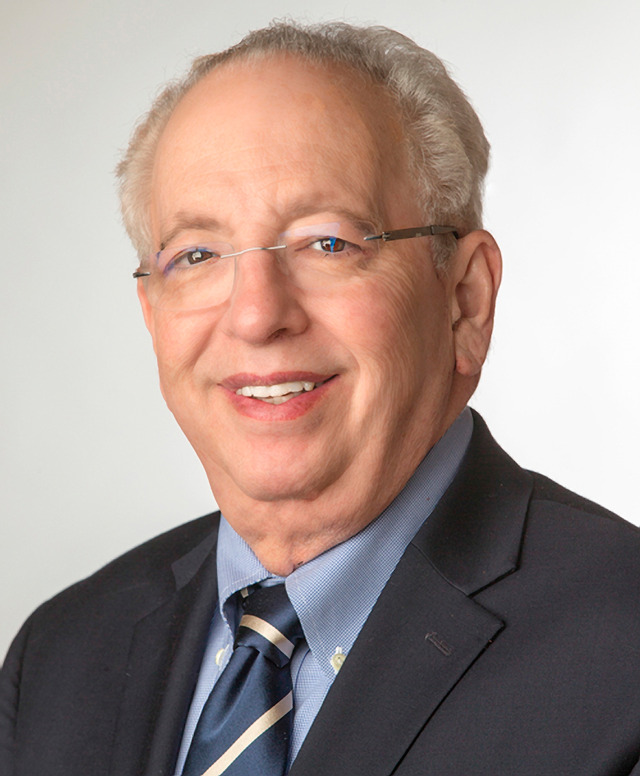
Why this site
I hold a PhD in mathematics from the University of California, Berkeley, and I spent my career inside organizations that build things, retiring from IBM as a Distinguished Engineer. My subject has been the same one throughout: the economics of project development — how an organization commits money to work whose outcome nobody yet knows.
That describes most development projects. A plan is written, a date is given, a budget is approved, and everyone in the room privately understands that the numbers are softer than they look. The usual answer is to demand firmer numbers. Mine is to measure how soft they are, to manage the work on those terms, and to build the instrumentation that improves the economics rather than the reporting.
This site collects that work: the book I wrote with two colleagues, the project tool that already provides methods for implementing its techniques, with more to come, and the articles behind both. None of it makes a project more certain than it is. It makes the uncertainty something a manager can measure and act on, rather than something to be talked around.
What you’ll find here
Three things.
The book
What it argues, who it is for, and where it stands. In press with CRC Press.
RiskyProject
The project management tool that already provides methods for implementing techniques from the book, with more to come.
Writing
Articles and papers on project control, development economics and applied probability.
There is nothing else behind these.
In press
The book
Project Economics Under Uncertainty: From Concept to Realization
I wrote it with Christian Smart and Glen Alleman. A development project is capital placed at risk before anyone knows what it will return, and we argue that it should be run on those terms, from the first idea to the delivered system.
The book rests on three principles, set out below. They fit together into one calculation, and we work it end to end on two case studies.
In practice
RiskyProject
RiskyProject is a project management tool that includes quantitative risk management, and risk analysis methods for computing ongoing estimates of project durations and costs. It is made by the Intaver Institute and used by planners in engineering, construction and defense.
The application already provides methods for implementing techniques described in the book, with more to come. The latest versions use my Bayesian parameter learning algorithm for project control.
Three principles
Everything on this site comes back to three ideas. They are not a methodology. They are the questions I ask before I look at anyone's plan.
- Embrace uncertainty How long will this take? For an innovative project, the exact duration and cost are unknowable. They must be described with a probability distribution, and that distribution includes a way of determining the risk. Once those risks are embraced, they can be managed.
- Think like an investor What is this project worth, and what would I pay to know more? A project is capital placed at risk in the expectation of a return. The return may be monetary or enhanced mission fulfillment. Investors hold portfolios, price options, and cut losses early. Development organizations rarely do any of the three, and they pay for it.
- Apply systems thinking What has to remain true after the release? Reliability, scalability and maintainability are not features to be added later. They are properties of the whole, and they are decided by choices made long before anyone notices them.
Recent writing
- Project control Evolution of Project Management Seventy years of software management methods, and what each of them was actually trying to fix.
- Development economics Beyond the Iron Triangle Fast, good, cheap, pick two is only half an account. Scope, schedule and cost belong in one objective.
- Applied probability Quantitative Risk Management Counting risks is not the hard part. Connecting the count to a management decision is.